How to Remove Red Wine From Clothes
The Fastest Way to Stop a Red Wine Stain
Red wine moves quickly through woven fabric, so your first goal is simple: lift what you can before heat, rubbing, or time pushes the color deeper. Act while the stain is still damp if possible. If the spill happened at dinner or an event, you can still do useful first aid without turning the moment into a laundry project.
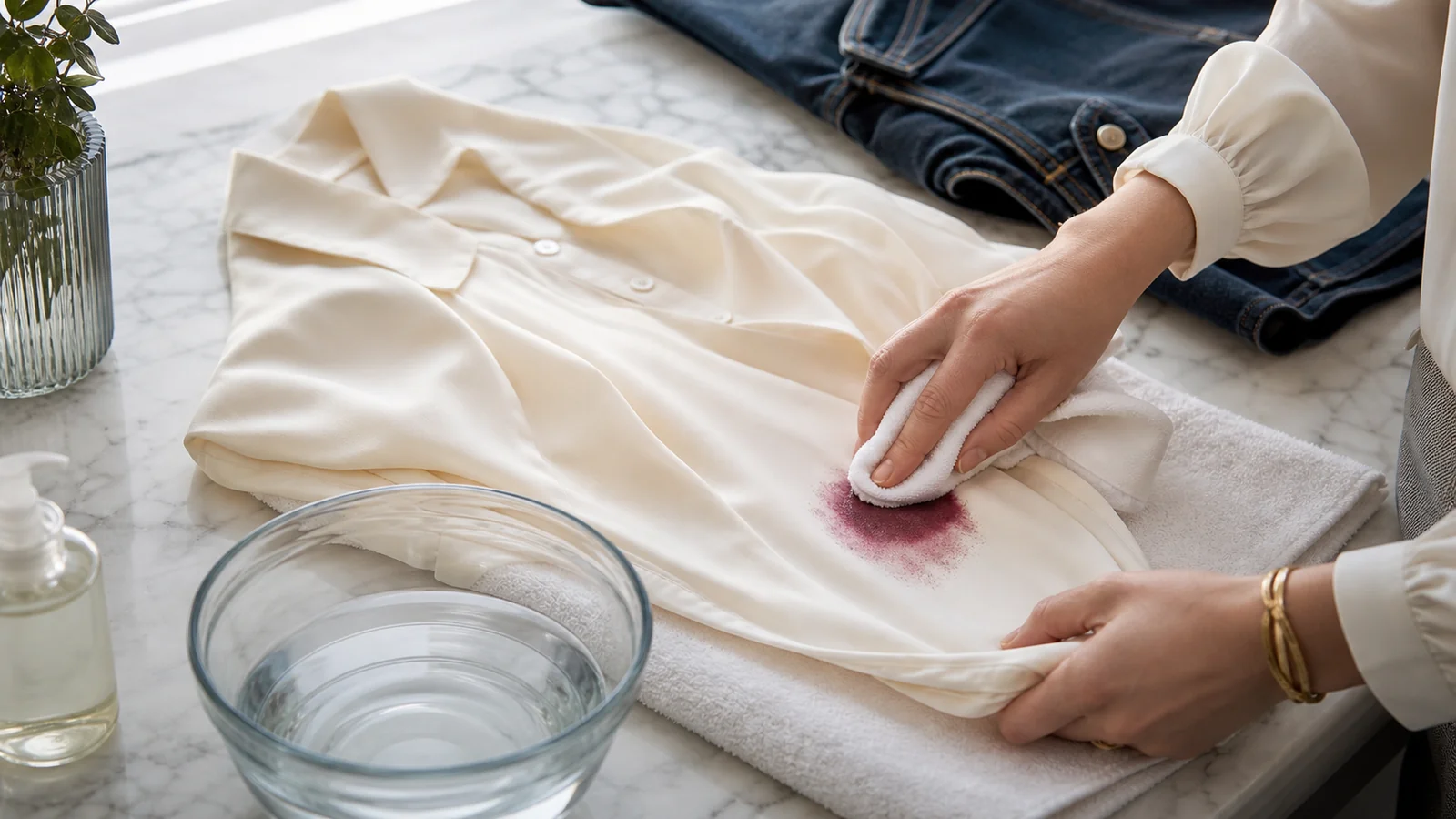
Start by blotting the stain with a clean white cloth, napkin, or paper towel. Press down and lift. Do not scrub. Scrubbing can rough up the surface and spread the stain into a larger shape.
If the garment is washable, hold the stained area under cool running water from the back of the fabric. This helps push wine out the way it came in. If you cannot get to a sink, keep blotting with a damp white cloth until you can treat the piece properly.
Avoid hot water at this stage. Heat can make some stains harder to remove, and it is especially risky when you are not sure what the garment fiber or dye can handle.
What You Need Before You Treat the Garment
Check the care label before you add any stain remover. A cotton shirt, a washable polyester dress, and a silk blouse do not need the same plan. If the label says dry clean only, blot the stain, keep the area damp with cool water if the fabric allows, and take it to a cleaner as soon as you can.
For washable clothes, gather a few basics:
| Item | Why it helps |
|---|---|
| Clean white cloths | They blot without transferring dye |
| Cool water | It dilutes fresh wine before washing |
| Liquid laundry detergent | It helps break up stain residue before the wash |
| Oxygen bleach, if fabric-safe | It can help with remaining color on washable whites and colorfast pieces |
| A towel | It supports the fabric while you blot |
Do a quick colorfast test on a hidden seam before using oxygen bleach or a stronger stain remover. If color transfers to your cloth, stop and use the gentlest option.
Step-by-Step: How to Remove Red Wine From Clothes
Use this method for washable clothes such as cotton, linen blends, polyester, denim, and many casual knits. Adjust the pressure and products for delicate fabrics.
1. Blot From the Outside In
Place the stained area on a clean towel. Blot around the outside edge first, then move toward the center. This keeps the stain from spreading. Change to a clean part of the cloth as it picks up wine.
2. Rinse With Cool Water
Turn the garment inside out or expose the back of the stain. Run cool water through the fabric for several minutes. The goal is to flush out loose pigment before you add detergent.
3. Add Liquid Detergent
Work a small amount of liquid laundry detergent into the stained area with your fingers. Let it sit for 5 to 10 minutes. Keep the fabric damp while it rests.
4. Soak If Color Remains
If the care label allows it, soak the garment in cool water with oxygen bleach or a fabric-safe stain remover. Follow the product directions. This step is useful when a pale blouse, white tee, or light dress still has a pink shadow after rinsing.
5. Wash and Check Before Drying
Wash the garment on the coolest cycle that fits the care label. When the cycle ends, check the stain in good light. If any color remains, repeat the pretreating step before drying. Do not put the piece in the dryer until the stain is gone.
How to Adjust for Different Fabrics
Fabric matters as much as speed. The same stain routine can save a cotton tee and damage a delicate blouse if you use too much pressure.
For cotton and linen, you can usually blot firmly, rinse well, and pretreat with detergent. These fabrics often tolerate a longer soak, but check the care label because blends and trims can change the rules.
For polyester, use cool water and detergent first. Polyester can hold oily residue from food or sauces that arrived with the wine, so detergent matters. Avoid high heat until you know the stain is gone.
For wool, silk, rayon, and embellished clothing, stay gentle. Blot, avoid rubbing, and skip soaking unless the label clearly says the garment is washable. When in doubt, protect the shape of the garment and use a professional cleaner.
For denim, test first if the denim is dark or raw. You do not want to lift the indigo while chasing a wine stain. Blot, rinse from the back, and use mild detergent.
Common Mistakes That Make Wine Stains Worse
The biggest mistake is rubbing. It feels useful in the moment, but it can push wine farther into the yarns and make the stained area look fuzzy.
The second mistake is drying too soon. A faint pink mark can look almost gone when the fabric is wet. Check again after washing, while the garment is still air-drying and before it goes near heat.
Be careful with salt, too. Salt may absorb liquid on a fresh spill, but it can also sit in the fabric and leave texture behind. If you use it at a table, treat it as a temporary fix and rinse the garment as soon as you can.
Club soda is also not magic. Plain cool water and patient blotting are usually more reliable than hoping carbonation will do the work.
When the Stain Is Old or Already Dried
An old red wine stain needs more patience. Rewet the area with cool water, apply liquid detergent, and let it sit longer before washing. If the garment is washable and colorfast, use an oxygen bleach soak according to the label directions.
You may need to repeat the cycle more than once. That is normal. Do not use chlorine bleach on colored clothes, wool, silk, spandex blends, or anything with delicate trims. It can damage fibers and change the color of the garment.
If the piece is expensive, tailored, or part of an outfit you rely on, stop before you overwork it. A cleaner has better tools for stubborn tannin stains, especially on delicate fabrics.
How to Keep a Party Outfit Wearable After a Spill
If you are away from home, blot first and protect the garment until you can wash it. Slip a clean napkin under the stain so wine does not transfer to another layer. If your outfit has a jacket, scarf, or overshirt, use it to reduce contact while you get through the event.
Once you are home, treat the piece before it lands in the hamper. A red wine stain hidden in a laundry basket is easy to forget, and time gives the pigment more chance to settle.
For future dinners, think about outfit fabrics. A washable dark knit, satin-look polyester skirt, or denim layer is easier to rescue than untreated silk or a pale dry-clean-only dress. That does not mean you should dress around accidents, but it helps when the night includes red wine, crowded tables, or travel.
FAQ
Can baking soda remove red wine from clothes?
Baking soda can absorb moisture, but it is not our first choice for clothing. Blot and rinse with cool water first, then use liquid detergent. If color remains on a washable, colorfast garment, use an oxygen bleach soak.
Should I use white wine on a red wine stain?
We would skip it. White wine may dilute the stain, but cool water is cleaner, cheaper, and easier to control. Adding more wine can also create extra odor and residue.
Can red wine come out after drying?
Sometimes, but it is harder. Rewet the stain with cool water, pretreat with liquid detergent, and repeat before using heat again. If the garment is delicate or valuable, take it to a cleaner.
Is red wine removal different for white clothes?
White washable clothes may tolerate oxygen bleach better than colored garments, but the care label still rules. Avoid chlorine bleach unless the label and fiber content clearly allow it.
The Bottom Line
To remove red wine from clothes, blot first, rinse with cool water, pretreat with detergent, and check the stain before drying. The calmer you are with the fabric, the better the garment usually looks afterward. Fast action helps, but careful fabric-aware treatment is what keeps the piece wearable.
You might also like
How to Remove Paint From Clothes Without Ruining Them
Learn how to remove paint from clothes by paint type, fabric, and stain stage before the dryer sets the mark.
How to Remove Dog Hair From Clothes
Use lint tools, damp hands, dryer tricks, and fabric-safe laundry habits to keep dog hair off clothes before you head out.
How to Get Paint Out of Clothes by Paint Type
Treat fresh, dried, water-based, and oil-based paint stains while protecting the fabric, color, and fit.