Nike vs Adidas Running Shoes: Fit and Style Guide
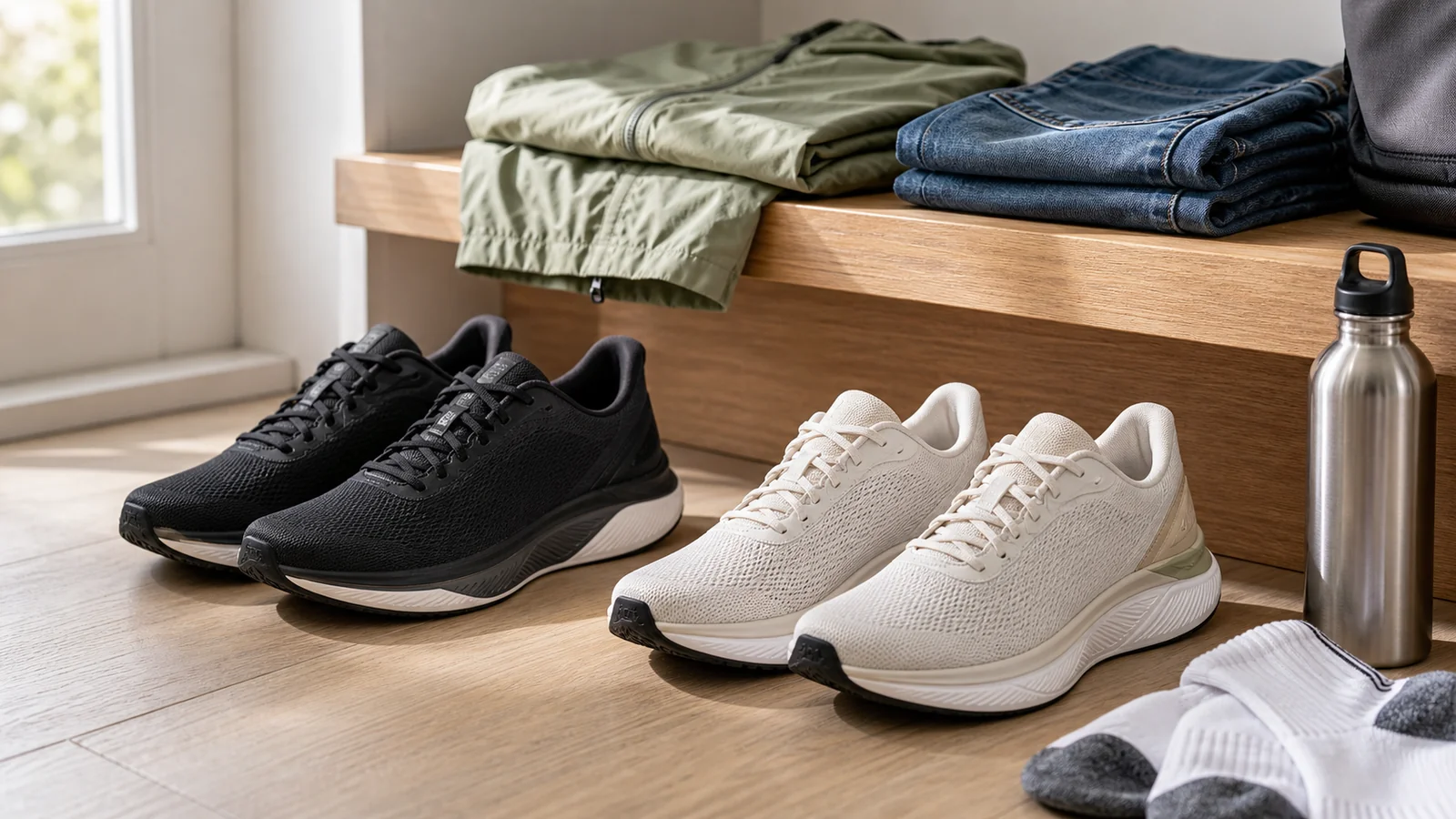
Choose by Run Feel, Not Brand Loyalty
Nike vs Adidas running shoes is not a question with one permanent winner. Both brands make daily trainers, cushioned shoes, faster workout shoes, race shoes, trail options, and lifestyle-friendly sneakers. The better choice depends on your feet, your running surface, your support needs, and how you want the shoes to look with everyday clothes.
If you run regularly, fit and ride matter more than logo. If you mostly wear running shoes casually, shape, color, and outfit balance may matter more. If you do both, you need a pair that can handle real miles without looking out of place in the rest of your wardrobe.
This guide compares Nike and Adidas as shopping categories. It does not claim that every model from one brand feels the same. Always judge the specific shoe in front of you.
The Quick Difference
Nike’s current road-running lineup is organized around three familiar benefit families: Pegasus for responsive cushioning, Structure for supportive cushioning, and Vomero for maximum cushioning. That makes Nike easier to shop if you already know whether you want bounce, stability, or plush comfort.
Adidas also covers the same broad needs, but the brand often feels split between performance running, comfort running, and lifestyle crossover. Adizero models lean faster and sportier. Supernova models focus on daily comfort and support. Ultraboost has long crossed between running and everyday sneaker style.
The simple version:
| Need | Nike often appeals if… | Adidas often appeals if… |
|---|---|---|
| Daily training | You want responsive, familiar trainers | You want a smooth, grounded daily ride |
| Maximum cushion | You like soft, energetic foam | You like comfort with a stable feel |
| Stability | You want a guided Structure-style shoe | You want support with a planted platform |
| Faster runs | You like Nike race-tech influence | You like Adizero’s performance direction |
| Casual outfits | You like sleek sport style | You like knit uppers, retro cues, or lifestyle crossover |
The real answer comes from trying the shoe. Two models within the same brand can fit and feel very different.
Cushioning: Bounce vs Planted Comfort
Nike is often associated with a livelier ride, especially in shoes using ZoomX, ReactX, Air units, or responsive midsole setups. Some runners like that because it makes daily runs feel more energetic. Others find very soft or bouncy shoes less stable.
Adidas is often associated with Boost, Light BOOST, Lightstrike, Lightstrike Pro, Dreamstrike+, and other cushioning systems across different models. Depending on the shoe, Adidas can feel smooth, stable, firm, springy, or plush. Ultraboost styles often have strong comfort appeal, while Adizero shoes aim more at speed and efficiency.
Do not choose cushioning by brand name alone. Ask:
- Do you want soft comfort or firmer ground feel?
- Do you like bounce underfoot or a calmer ride?
- Are you running easy miles, speed sessions, long runs, or walking?
- Does the stack height feel stable when you turn?
- Does the shoe still feel good after several minutes, not just the first step?
If you are new to running, start with comfort and stability rather than the most dramatic foam technology.
Fit: Try Both With Real Socks
Fit is where Nike vs Adidas often becomes personal. Many runners report that Nike can feel snug or narrow in some models. Adidas often feels more true-to-size for some shoppers, but many Adidas running shoes are not especially wide either.
That does not mean one brand is wrong. It means your foot shape matters. A narrow heel, wide forefoot, high instep, low arch, bunion, orthotic, or thick sock can change the answer.
Check these points in both brands:
- Thumb-width space in front of the longest toe
- Heel secure without slipping
- Midfoot held without numbness
- Toe box wide enough for swelling
- No pressure on the big toe, pinky toe, or top of foot
- Enough interior volume for orthotics if you use them
Try running shoes later in the day if your feet swell. Wear the socks you actually use. If a shoe feels barely tolerable in the store, it probably will not become better after miles.
Stability and Support
Both Nike and Adidas make supportive shoes, but the right support depends on what your foot does while running. Some runners overpronate and feel better with guidance. Some flat-footed runners need a wider platform. Some neutral runners simply want a secure upper and stable base.
Nike’s Structure family is the clearest place to start if you want support inside Nike’s road lineup. Adidas shoppers may look at supportive Supernova options or other stability-oriented models depending on the current range.
Support should feel natural, not forced. If a shoe pushes your foot outward, creates arch pain, or changes your knee comfort, it may not be the right type of stability for you.
For a deeper fit framework, our best running shoes for flat feet guide explains how width, platform stability, arch feel, and heel hold work together.
Daily Training vs Speed Work
For daily training, both brands have strong options. A daily trainer should be comfortable, durable enough for regular use, stable enough for your stride, and not so aggressive that easy runs feel awkward.
Nike daily options often appeal to runners who like a responsive, modern running feel. Pegasus-style shoes can work for many easy and moderate runs. Vomero-style shoes appeal when you want more cushioning. Structure-style shoes are for runners who want added support.
Adidas daily options often appeal to runners who want a smooth, grounded ride or a shoe that crosses into walking and casual wear. Supernova and Ultraboost-style shoes can be more comfort-focused, while some Adizero models feel faster and more performance-minded.
For speed work, compare the specific model. Some Nike and Adidas shoes include superfoams, plates, rods, or race-inspired geometry. Those features can feel exciting, but they are not necessary for every runner.
Road, Trail, Gym, and Walking Use
Road running shoes are built for pavement, sidewalks, treadmills, and similar surfaces. Trail shoes need different traction, protection, and upper durability. Gym shoes need side-to-side stability. Walking shoes need comfort over long standing time.
Do not use one brand name to cover every activity. A soft Nike road shoe may feel great for easy miles and awkward for gym classes. An Adidas lifestyle-running shoe may be comfortable for walking but not ideal for faster training.
Use this decision path:
| Main use | What to prioritize |
|---|---|
| Road running | Cushioning, fit, outsole durability, support |
| Treadmill | Comfort, breathability, stable landing |
| Walking | All-day comfort, heel hold, easy styling |
| Gym classes | Lateral stability, lower wobble, secure upper |
| Trails | Trail outsole, protection, weather needs |
| Casual outfits | Shape, color, pants compatibility |
If you do many activities, consider separate pairs. Running foam wears down faster when you also use the shoes for long walks, errands, and workouts.
Durability and Replacement
Most running shoes need replacement when cushioning feels flat, traction wears smooth, the upper stretches out, or your body starts noticing aches in a pair that used to feel comfortable. Mileage ranges are only a guide because body weight, surface, gait, weather, and use all change wear.
Many running retailers and shoe-care guides use a broad 300 to 500 mile range for road shoes. Treat that number as a starting point, not a rule.
Inspect both brands the same way:
- Does the midsole feel compressed?
- Is the outsole smooth in high-wear areas?
- Is the upper stretched, torn, or loose?
- Does one shoe tilt more than the other?
- Do your feet or joints feel different in this pair?
If you use running shoes mainly for outfits, they may look good after the foam is no longer ideal for running. Keep performance pairs and casual pairs separate if you can.
Which Brand Is Better for Outfits?
Nike running shoes often work well with sporty, sleek, and streetwear-leaning outfits. They can look sharp with straight jeans, technical jackets, leggings, track pants, cargos, and simple tees. Bright colorways become the focal point quickly.
Adidas running shoes often work well with casual wardrobes that include relaxed denim, knitwear, track pants, wide trousers, and retro sport pieces. Ultraboost-style knit uppers can feel comfortable and easy for travel, while Adizero-style shoes look more performance-focused.
For daily outfits, color matters more than brand. Black, white, gray, navy, cream, and muted metallics are easiest to repeat. Loud race colorways can look great, but the rest of the outfit should stay simple.
If you like pale sneakers, our off-white shoes outfit guide has useful color-pairing ideas that also apply to light running shoes.
Who Should Choose Nike?
Choose Nike first if you like a responsive ride, want a clear road-running lineup, enjoy sport-forward design, or already know Nike fits your foot well. Nike can be especially appealing if you want a shoe that feels energetic and looks modern with athletic outfits.
Nike may be less ideal if you often find the fit too narrow, need a very roomy toe box, dislike bouncy cushioning, or want a subtler casual sneaker.
Good Nike shopping questions:
- Do I want responsive, supportive, or maximum cushioning?
- Does the toe box work for my foot?
- Is the shoe stable enough for my stride?
- Will I run in it or mostly wear it casually?
- Does the colorway work with my clothes?
Who Should Choose Adidas?
Choose Adidas first if you like a smoother or more planted ride, want comfort-focused daily shoes, prefer some lifestyle crossover, or already know Adidas fits your foot well. Adidas can be especially appealing if you wear running shoes with relaxed denim, track pieces, or travel outfits.
Adidas may be less ideal if the specific upper feels too knit, too warm, too loose, or not supportive enough for your stride. Some performance Adidas shoes are also very specific; a fast Adizero model may not be the best easy-day shoe.
Good Adidas shopping questions:
- Do I want comfort, speed, support, or lifestyle crossover?
- Does the upper hold my foot securely?
- Is the cushioning too soft, too firm, or just right?
- Is this a running model or more of a casual sneaker?
- Does the outsole suit my surface?
Common Mistakes
The first mistake is buying by brand rivalry. Nike and Adidas both make good and bad matches for different feet.
The second mistake is choosing the most cushioned shoe automatically. More foam can mean more comfort, but it can also feel heavier or less stable.
The third mistake is ignoring width. Neither brand is automatically the answer for wide feet in every model.
The fourth mistake is using race shoes for every run. Fast shoes can be fun, but daily training often needs comfort and durability.
The fifth mistake is turning a running shoe into an everything shoe. Daily walking, errands, gym work, and running all add wear.
FAQ
Are Nike or Adidas running shoes better?
Neither brand is always better. Nike may appeal if you like responsive cushioning and a clear running lineup. Adidas may appeal if you like smooth comfort, planted feel, or lifestyle crossover.
Do Nike running shoes run small compared with Adidas?
Some Nike models feel snug to many runners, while some Adidas models feel more true-to-size. Fit varies by shoe, so try both with your running socks.
Which brand is better for wide feet?
It depends on the model. Neither brand is automatically best for wide feet across the whole lineup. Look for wide sizing, roomy toe boxes, and stable platforms.
Can I wear running shoes as everyday sneakers?
Yes, but separate your main running pair if you train often. Walking and errands add wear, and worn cushioning can affect run comfort.
The Bottom Line
Nike vs Adidas running shoes comes down to fit, ride, support, surface, and style. Nike often feels more responsive and sport-forward. Adidas often feels smooth, comfortable, and easy to wear casually. Try the specific model, check your toe room and heel hold, and choose the pair that supports your real miles and your real outfits.
You might also like
Topo Shoes: Fit and Style Guide
Review Topo shoes by roomy toe box, low drop, road and trail use, walking comfort, sizing, and casual outfits.
Best Running Shoes for Flat Feet: Support Guide
Find running shoes for flat feet by stability, arch feel, width, cushioning, gait, and real fit checks.
Cheer Shoes: Fit, Grip, and Style Guide
Choose cheer shoes by mat grip, support, flexibility, stunt role, team rules, sideline use, and clean white styling.