Best Shoes for Plantar Fasciitis: Support Guide
Choose Support Before Style Details
The best shoes for plantar fasciitis are not the prettiest shoes with a soft insole. They are shoes that reduce stress on the heel and arch while you stand, walk, commute, work, or exercise.
Plantar fasciitis usually shows up as heel pain, often worse with the first steps after rest. Shoes cannot diagnose or cure it, and persistent pain deserves guidance from a podiatrist, physician, or physical therapist. But footwear matters. Medical and podiatry sources consistently point toward supportive shoes with good arch support, thick cushioning, stable soles, and enough heel structure.
This guide uses a toplist structure by shoe need. Model versions change, and feet are personal. Treat the examples as starting points to try, not one-size-fits-all prescriptions.
What a Plantar Fasciitis Shoe Needs
Look for a shoe that supports the foot without feeling rigid or punishing. The goal is a stable platform, a cushioned heel, and enough arch support that your foot does not feel like it collapses into the shoe.
Key features:
| Feature | Why it helps | Watch out for |
|---|---|---|
| Arch support | Helps reduce strain through the arch | A hard arch bump that jabs your foot |
| Cushioned heel | Softens repeated heel impact | Foam that feels mushy or unstable |
| Thick sole | Adds protection from hard floors | Tall soles that wobble side to side |
| Stable base | Keeps the foot centered | Narrow, tippy platforms |
| Firm heel counter | Helps hold the rearfoot | Collapsed or soft heel backs |
| Removable insole | Makes room for orthotics | Shoes that become too shallow with inserts |
| Moderate heel-to-toe drop | May reduce heel tug for some feet | Completely flat, thin soles during a flare |
Avoid shoes that are very flat, very flexible through the middle, worn down, or thin under the heel. Barefoot time on hard floors can also aggravate symptoms for many people.
Best Overall Type: Supportive Walking Sneakers
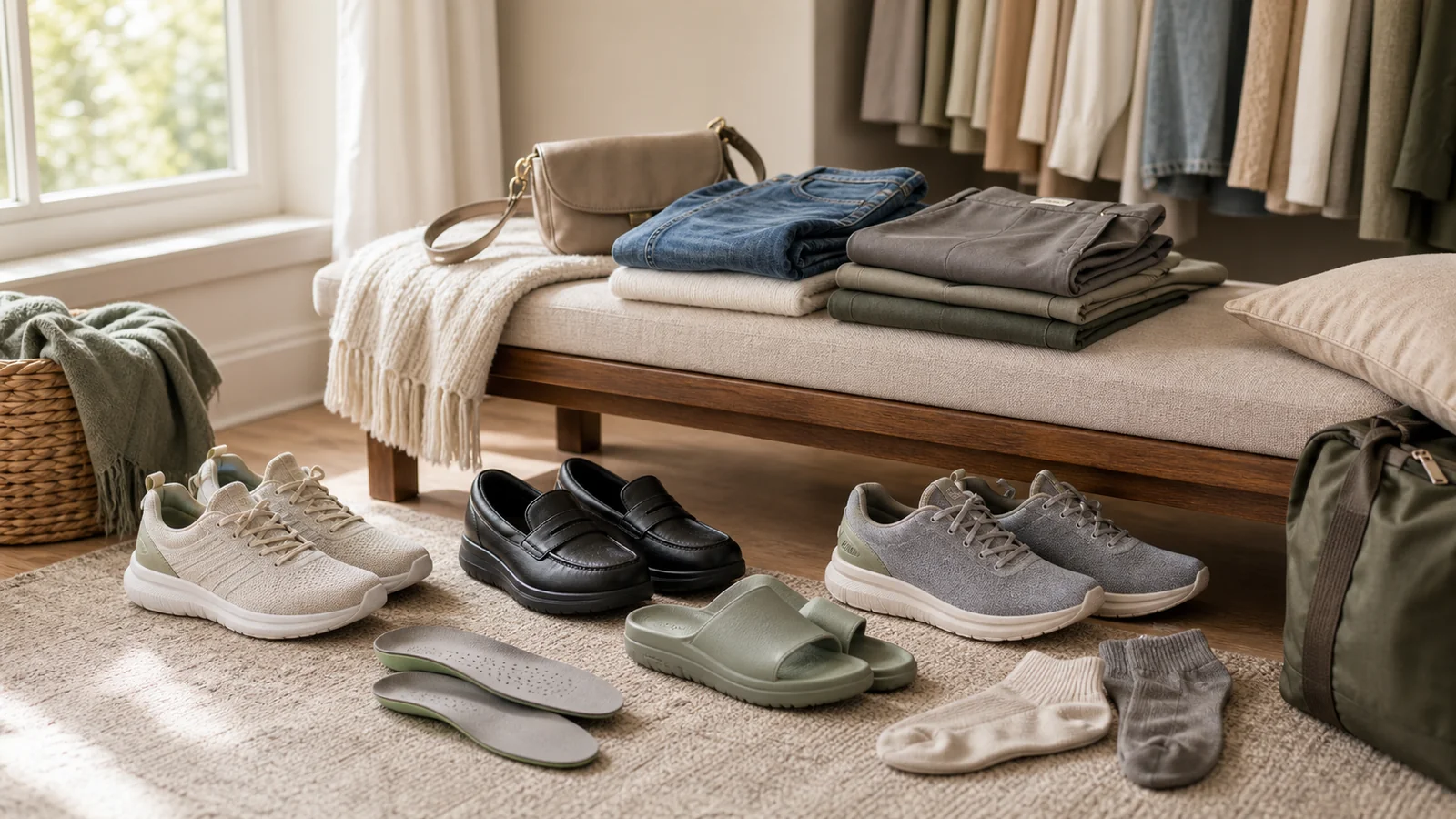
For everyday plantar fasciitis needs, supportive walking sneakers are often the most practical first choice. They are useful for errands, commuting, travel, long standing days, and casual outfits.
Look for a cushioned midsole, secure heel, stable base, roomy toe box, and built-in arch support. Brands often discussed for this category include Vionic, Skechers Arch Fit, New Balance, Brooks, Hoka, Orthofeet, Kuru, and Aetrex. The exact model matters less than whether it holds your foot comfortably.
Choose this type if your heel hurts during errands or standing on hard floors. Try the shoe indoors for at least several minutes. Your heel should feel cushioned, but your foot should not sink so much that your ankle rolls inward.
For styling, keep supportive sneakers clean and intentional. Pair black or white versions with straight jeans, relaxed trousers, ribbed dresses, leggings, trench coats, denim jackets, or simple knits.
Best for Running: Cushioned Stability Trainers
If you run with plantar fasciitis symptoms, get personal guidance if pain persists. Running loads the heel and arch repeatedly, so the wrong shoe can make a mild problem feel worse.
For many runners, a cushioned stability trainer is a sensible category to try. Look for shock absorption, a stable heel, a wide enough platform, and support that guides the foot without forcing it. Popular model families in this space often include Brooks Adrenaline GTS, ASICS GEL-KAYANO, New Balance 860, Saucony Guide, and Hoka Arahi. For neutral runners who need cushion more than guidance, families such as Brooks Ghost, ASICS GEL-NIMBUS, New Balance Fresh Foam, or Hoka Bondi-style shoes may enter the fitting conversation.
Do not buy by brand name alone. Try the current version with your running socks and any orthotic you use. Jog if the store allows it. A good shoe should feel stable when you turn, stop, and land, not just soft while standing.
Our best running shoes for flat feet guide explains how arch feel, width, platform stability, and heel hold work together.
Best for Standing All Day: Rocker or Work-Friendly Cushion
If you stand for work, heel pain often comes from hours of hard-floor impact. The best shoe may be a supportive sneaker, a cushioned work shoe, or a clog-style shoe with a stable sole.
Look for thick cushioning, a deep heel cup, a stable base, and a footbed that does not flatten immediately. Some people like rocker-style soles because they reduce how much the foot bends through each step. Others prefer a firmer walking shoe with an orthotic.
Work-friendly options may come from brands such as Dansko, Hoka, Brooks, New Balance, Vionic, Kuru, Orthofeet, or Aetrex depending on your dress code and floor surface. If you need slip resistance, check that feature specifically.
For outfits, choose the cleanest shape your job allows. Black leather, dark navy, gray, or white supportive shoes are easier to repeat with trousers, uniforms, denim, and simple layers.
Best House Shoes: Supportive Recovery Slides
Many plantar fasciitis routines fail at home. You wear supportive shoes outside, then walk barefoot on tile, wood, or concrete floors. That can keep the heel irritated.
Supportive recovery slides or house sandals can help because they add cushioning and arch support indoors. Look for a deep heel cup, contoured footbed, soft but stable foam, and enough grip that you do not slide around. Oofos, Vionic, PowerStep, Hoka recovery slides, and similar comfort-focused brands often appear in this category.
Avoid completely flat slippers with thin foam. They may feel cozy at first but offer little structure. Also avoid loose slides that make your toes grip to keep the shoe on.
House shoes do not need to be stylish enough for the street. They need to be easy to put on during the morning, after a shower, and any time you would otherwise walk barefoot.
Best Sandals: Contoured Footbeds and Straps
Flat fashion sandals are often rough on plantar fasciitis because they give the foot little cushion or support. That does not mean you can never wear sandals. It means the sandal needs more structure.
Look for a contoured footbed, arch support, cushioned heel, stable sole, and straps that hold the foot. Adjustable straps are useful because swelling and foot shape change through the day.
Supportive sandal brands often discussed for plantar fasciitis include Vionic, Birkenstock, Oofos, PowerStep, Aetrex, Dansko, Kuru, and Orthofeet. Some feel soft and recovery-focused. Others feel firmer and more structured. Try both if you are not sure which your foot likes.
For outfits, choose a sandal that matches the clothes. A sporty recovery slide works with leggings, shorts, linen pants, and errands. A leather supportive sandal works better with summer dresses, wide trousers, and travel outfits.
Best Dress Shoes: Low Heels and Real Support
Dress shoes are harder because many flats are too flat, many heels are too high, and many slim shoes have little arch support. The best dress shoe for plantar fasciitis usually has a low to moderate heel, cushioned footbed, stable heel, supportive arch, and enough room for the toes.
Try low block heels, supportive loafers, cushioned ballet flats, low wedges, Mary Janes with support, or dressy mules that actually hold the foot. Vionic, Aetrex, Naturalizer, Dansko, Clarks, Ecco, and similar comfort-leaning brands may be worth trying.
Avoid thin ballet flats that fold in half, hard leather soles with no padding, tall stilettos for long standing, and backless shoes that make your toes grip. If you need a formal shoe for one event, bring a backup pair for travel or later in the night.
For black trousers, supportive loafers often look sharper than comfort sneakers. For dresses, a low block heel or cushioned flat can feel polished without making heel pain the price of the outfit.
Best for Orthotics: Removable-Insole Shoes
If you use over-the-counter inserts or custom orthotics, choose shoes that make room for them. The best shoe for orthotics usually has a removable factory insole, enough depth, secure heel hold, and a stable platform.
Take the factory insole out before inserting your orthotic unless your clinician says otherwise. Stacking inserts can make the shoe too tight and lift your heel out of the cup.
After adding the orthotic, check:
- Heel hold without slipping
- No pinching over the top of the foot
- Toes still able to move
- Arch support in the right place
- Collar not rubbing the ankle
- Foot sitting fully on the platform
Do not assume an insert fixes every shoe. A flimsy shoe with a good insert may still twist too much. A narrow shoe with an insert may create new pressure.
Best for Travel: One Supportive Sneaker Plus One Easy Shoe
Travel often means hard floors, long airport walks, unfamiliar streets, and more standing than usual. If you have plantar fasciitis, pack around support first.
A good travel setup might include one supportive walking sneaker and one lighter shoe that still has arch support. For warm weather, that second pair might be a contoured sandal. For city trips, it might be a cushioned loafer or supportive flat. For colder trips, it might be a stable ankle boot.
Do not make a brand-new pair your only travel shoe. Wear it at home first. Check for heel slip, arch pressure, toe rubbing, and whether your foot feels tired after an hour.
If supportive shoes rub, solve the fit issue early. Our how to stop shoes from blistering guide covers socks, lacing, padding, and break-in steps.
Shoes to Avoid During a Flare
During a plantar fasciitis flare, be cautious with shoes that make the fascia work harder or leave the heel underprotected.
Common problem shoes include:
- Thin ballet flats with no support
- Flat flip-flops
- Barefoot-style shoes if your foot is not adapted
- Worn-out running shoes
- Unsupportive slippers
- Very high heels for long standing
- Hard leather soles with little cushion
- Flexible fashion sneakers that twist at the midfoot
This does not mean you must give up style forever. It means painful periods need smarter rotation. Save less supportive shoes for short, low-walking plans once symptoms are calm and your clinician has no concerns.
Fit Checks Before You Keep Them
Try plantar fasciitis shoes later in the day if your feet swell. Wear the socks you will actually use. Bring orthotics if you have them.
Walk on a hard surface if possible. Heel pain often hides on carpet. Notice whether the shoe cushions the heel, supports the arch, and holds the foot without squeezing.
Check the shoe bend. It should flex near the forefoot, not collapse through the middle. Twist it gently. If it wrings out easily, it may not provide enough support.
Keep the pair returnable until you know it works indoors. A shoe that hurts in the first five minutes is rarely the right answer.
Common Mistakes
The first mistake is buying the softest shoe. Cushion helps, but mushy shoes can feel unstable.
The second mistake is wearing good shoes outside and flat slippers at home. Indoor support matters too.
The third mistake is ignoring worn-out shoes. Old athletic shoes can lose cushioning and support before they look terrible.
The fourth mistake is choosing a high arch bump that feels painful. Support should feel secure, not sharp.
The fifth mistake is treating shoe lists as medical advice. Your foot shape, symptoms, activity, and clinician guidance matter.
FAQ
What shoes are best for plantar fasciitis?
The best shoes for plantar fasciitis usually have arch support, a cushioned heel, thick sole, stable base, and secure heel hold. Supportive walking sneakers are often the most practical starting point.
Are running shoes good for plantar fasciitis?
Many running shoes can work because they offer cushioning and support, but the shoe must fit your foot and activity. Persistent pain during running should be discussed with a clinician.
Are flat shoes bad for plantar fasciitis?
Very flat, thin, unsupportive shoes can aggravate symptoms for many people. If you want a flat-looking shoe, choose one with hidden cushioning, arch support, and a stable sole.
Should plantar fasciitis shoes be soft or firm?
They should be cushioned but stable. A shoe that is very soft and wobbly may not support the heel and arch well enough.
The Bottom Line
The best shoes for plantar fasciitis combine heel cushioning, arch support, a stable base, and real fit. Start with supportive walking sneakers, add house shoes if you walk barefoot indoors, and choose dress or sandal options with structure instead of thin flat soles. Style still matters, but comfort and support have to lead.
You might also like
Best Shoes for Standing All Day: Style Guide
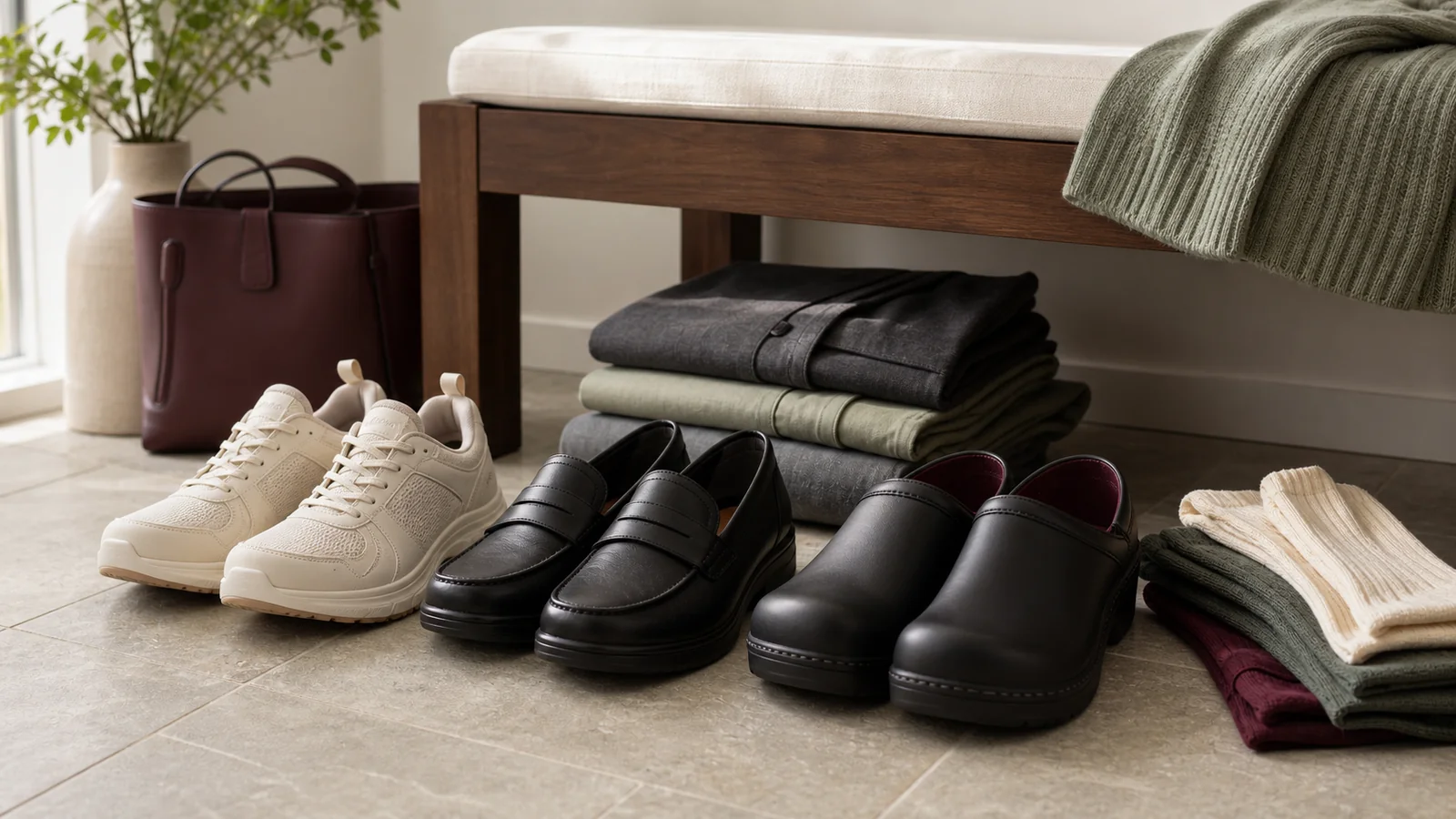
Find shoes for standing all day by support, cushioning, stability, work dress codes, hard floors, and outfit needs.
Topo Shoes: Fit and Style Guide
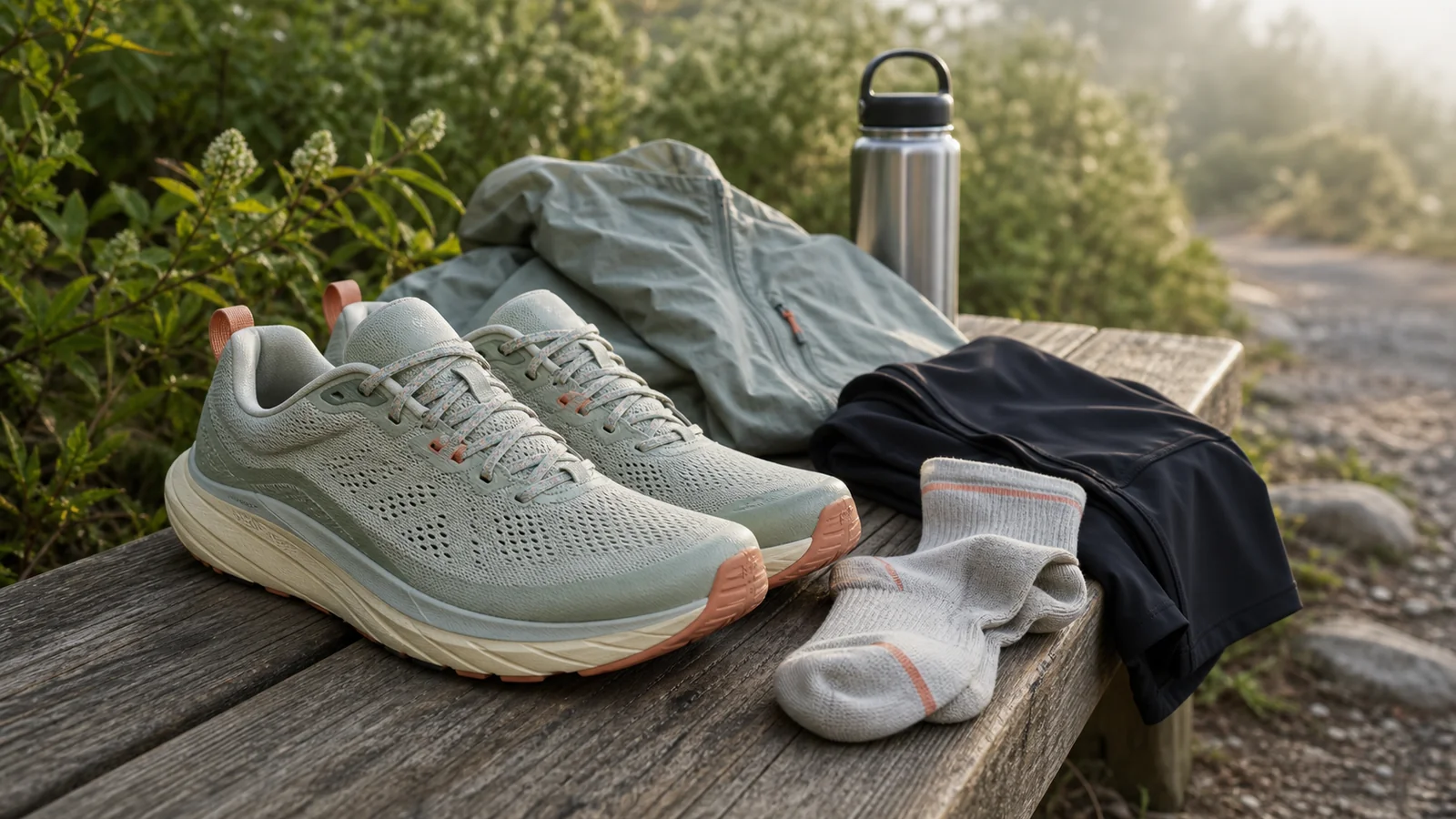
Review Topo shoes by roomy toe box, low drop, road and trail use, walking comfort, sizing, and casual outfits.
New Balance Golf Shoes: Comfort Guide
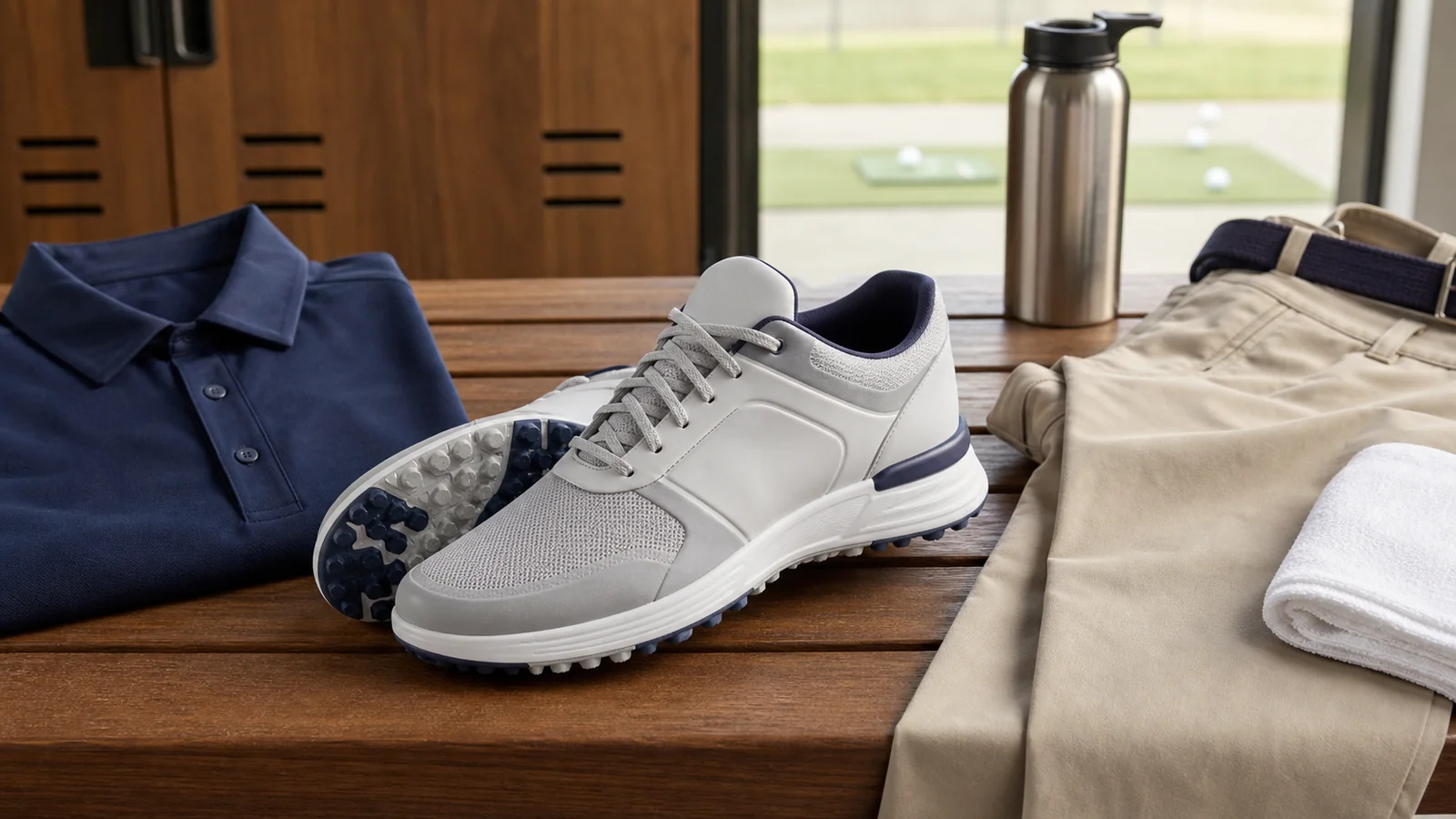
Review New Balance golf shoes by walking comfort, width, traction, waterproofing, fit, and course outfits.