Best Shoes for Standing All Day: Style Guide
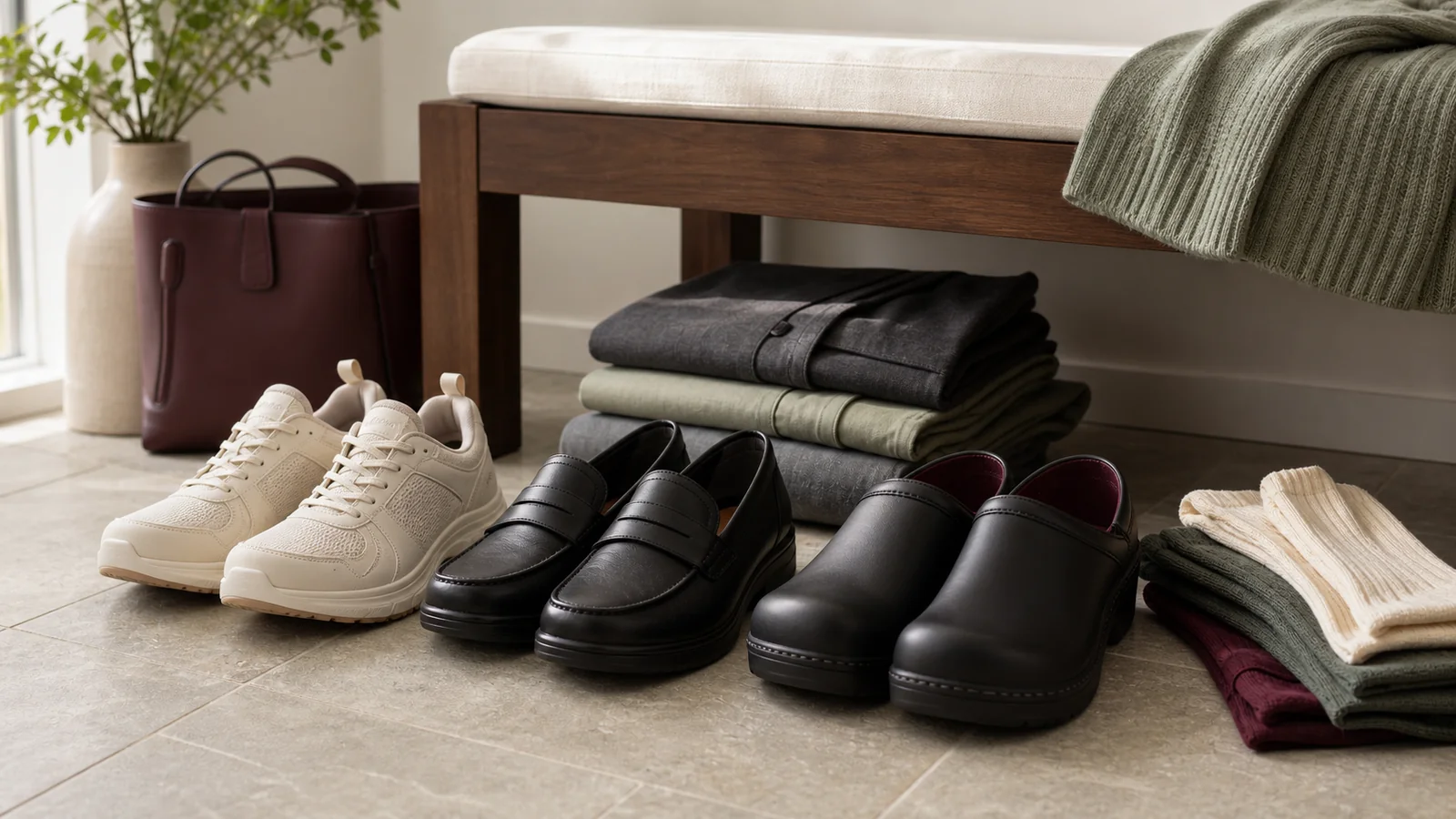
Choose for the Floor, Not Just the Foot
The best shoes for standing all day are not always the softest pair in the store. Long standing asks for a balance of cushioning, support, stability, fit, and work-appropriate style. A shoe can feel cloud-like for five minutes and still leave your arches, heels, knees, or back tired after eight hours on hard floors.
Start with the place you stand most: retail floor, classroom, salon, hospital, restaurant, office event, trade show, airport, studio, or home. The floor, dress code, and walking pattern decide more than a trend list.
This guide uses a toplist structure by daily need. It does not claim hands-on testing of specific models. Brand versions, materials, and sizing change, so use the categories and fit checks as your filter before buying.
What Standing-All-Day Shoes Need
A standing shoe should reduce fatigue without making your foot work harder to stay balanced. Look for support you can feel, but avoid anything that jabs, rocks, or lets your ankle wobble.
| Feature | Why it matters | Watch out for |
|---|---|---|
| Cushioned midsole | Softens repeated pressure from hard floors | Foam that feels mushy or unstable |
| Stable base | Keeps your foot centered as you stand | Narrow, tall, tippy soles |
| Arch support | Helps prevent the foot from collapsing into the shoe | A hard arch bump in the wrong place |
| Firm heel counter | Holds the rearfoot more securely | Collapsed heel backs |
| Roomy toe box | Gives toes space as feet swell | Buying too long instead of wide enough |
| Slip-resistant outsole | Useful for food, salon, medical, or wet floors | Assuming all sneakers are slip-resistant |
| Removable insole | Allows orthotics or better inserts | Shoes that become too shallow with inserts |
If your feet hurt every day, do not solve it only with a prettier shoe. Persistent pain deserves guidance from a podiatrist, physical therapist, or clinician.
Best Overall: Supportive Walking Sneakers
Supportive walking sneakers are the safest starting point for many standing jobs. They work for retail, teaching, errands, commuting, travel, and casual offices when the dress code allows sneakers.
Look for a cushioned but stable sole, secure heel, breathable upper, removable insole, and enough forefoot room. Many people do better with walking or running-shoe brands than with fashion sneakers because the midsole and heel structure are built for long wear.
This category is especially useful if you stand and walk. A shoe that only feels good while standing still may not hold your foot well once you move between counters, aisles, classrooms, or transit platforms.
For styling, choose the cleanest color your workplace allows. White, cream, black, gray, navy, and soft taupe sneakers are easier to pair with straight trousers, dark denim, knit dresses, uniforms, and simple layers.
Best for Hard Floors: Cushioned Stability Shoes
Hard floors expose weak shoes quickly. Concrete, tile, hospital flooring, salon floors, and retail floors all create repeated pressure under the heel and forefoot.
For these days, look for more cushioning than a thin lifestyle sneaker, but keep the platform stable. A wide base, structured heel, and firmer sidewalls can matter as much as foam thickness.
Choose cushioned stability shoes if:
- Your heels feel sore by the end of the day.
- You stand on concrete, tile, or hard commercial floors.
- Your ankles roll inward when you get tired.
- Thin shoes leave your feet buzzing.
- You need comfort but dislike unstable soft foam.
If you already manage heel pain, our best shoes for plantar fasciitis guide explains why heel cushioning, arch support, and platform stability need to work together.
Best for Kitchens, Clinics, and Salons: Work Clogs
Work clogs can be excellent for standing all day when your job allows them. The best versions have a stable sole, cushioned footbed, easy-clean upper, secure enough heel shape, and slip-resistant outsole when the floor demands it.
They are common in kitchens, clinics, salons, labs, and other practical settings because they can be easier to clean than mesh sneakers. Some clog styles also give toes more room, which helps when feet swell during long shifts.
The trade-off is style and heel hold. Some clogs feel too loose for fast walking or stairs. Backless clogs can make your toes grip to keep the shoe on. If you move quickly, choose a pair with a back strap or more secure heel design.
Style them with straight work pants, scrubs, utility trousers, wide-leg uniforms, or simple black leggings if your dress code allows. Keep the pair clean because clogs can look intentional or tired depending on condition.
Best for Dress Codes: Supportive Loafers
If sneakers are not polished enough, supportive loafers can bridge comfort and style. The right loafer is structured, cushioned, and roomy enough through the toe box. The wrong loafer is hard, flat, narrow, and unforgiving.
Look for a low heel or slight platform, padded footbed, flexible forefoot, stable outsole, and enough depth for your foot. Leather or suede can soften over time, but it should not pinch hard from the start.
Supportive loafers work well with trousers, ankle pants, dark denim, midi skirts, sweater dresses, blazers, cardigans, and office uniforms. Black, oxblood, brown, navy, and deep olive are especially easy to repeat.
Avoid thin, slipper-like loafers for long standing days unless you know your feet tolerate them. A polished shoe still needs real underfoot support.
Best Feminine Option: Cushioned Mary Janes or Flats
Flats can be tricky for all-day standing because many are too thin. If you want a softer or more feminine shoe, look for cushioned Mary Janes, supportive ballet flats, low block heels, or dress flats with real sole structure.
The strap on a Mary Jane can help heel hold, which reduces the sliding that causes blisters. A square or round toe can be kinder than a narrow pointed toe. A low block heel can feel more stable than a completely flat sole for some feet.
Check the shoe from the side. If the sole is paper-thin and the shoe folds easily through the middle, it may look pretty but feel harsh by lunchtime.
For outfits, pair black Mary Janes with straight trousers and a soft knit, burgundy flats with a midi skirt and blazer, or cushioned cream flats with dark denim and a cardigan. Keep a backup pair nearby for new shoes until you know they can handle the day.
Best for Teachers, Retail, and Events: Smart Sneakers
Some standing days require polish but not formal shoes. Teachers, retail teams, gallery staff, conference workers, and event crews often need shoes that are comfortable, tidy, and outfit-friendly.
Smart sneakers are clean sneakers with a supportive build. They may be leather, knit, suede, or smooth synthetic, but they should have more structure than a minimal fashion sneaker.
Choose this category if your day includes standing, light walking, greeting people, climbing stairs, or moving between rooms. Look for subtle colors, no distracting logos, a stable heel, and a sole that looks polished rather than gym-only.
Outfit formulas:
- White supportive sneakers with navy trousers, a striped tee, and a cardigan.
- Black leather sneakers with straight black pants and a cropped jacket.
- Cream sneakers with wide-leg denim and a fine knit.
- Gray sneakers with a midi skirt, tee, and blazer.
If shoes rub during long event days, our how to stop shoes from blistering guide covers socks, lacing, padding, and break-in steps.
Best for Travel Days: One Cushioned Sneaker
Travel standing is sneaky. Airports, train platforms, museums, queues, and hotel lobbies can add hours of standing on hard floors. A stylish but unsupportive shoe can drain the whole trip.
For travel, choose one cushioned sneaker or walking shoe that works with most outfits. Neutral colors are easiest. The shoe should be broken in, supportive, and roomy enough for swelling.
Test it before packing:
- Wear it for a full errand loop.
- Stand on a hard floor for 20 minutes.
- Try it with travel socks.
- Check heel rub and toe pressure.
- Make sure it works with your longest pants.
Pack a second shoe only if it adds a real function: supportive sandal, dress loafer, weather boot, or recovery slide. Do not pack three pretty shoes and no reliable standing shoe.
Best At-Home Pair: Recovery Slides or House Sneakers
Standing all day does not end when you get home. If your floors are hard, walking barefoot after a long shift can keep your heels and arches tired.
Supportive recovery slides, cushioned house shoes, or clean indoor sneakers can help. Look for a stable sole, gentle arch support, soft but controlled cushioning, and a shape that stays on without toe gripping.
Avoid flat slippers that collapse under your foot. They may feel cozy but offer little support. Also avoid slides that are so loose your toes have to claw to keep them on.
House shoes do not need to match every outfit. They need to make the first steps after a long day feel easier.
How to Fit Shoes for Long Standing
Fit your standing shoes later in the day if possible. Feet swell with heat, activity, and time, so a morning-perfect shoe can feel tight by the afternoon.
Wear the socks, tights, or orthotics you will actually use. Walk on hard flooring. Stand still for several minutes. Shift your weight. Notice whether the shoe supports you or whether your foot keeps searching for balance.
Check these fit signals:
- Toes can move without hitting the front.
- The widest part of your foot sits on the widest part of the shoe.
- The heel stays secure.
- The arch support meets your arch, not your heel or forefoot.
- The sole does not twist easily through the middle.
- The shoe bends near the toes, not under the arch.
- The upper does not press across bunions, high insteps, or pinky toes.
Keep the box until you know the shoes work indoors. A standing shoe that hurts in the first hour usually does not become magic on the fifth shift.
Outfit Notes by Dress Code
For casual work, supportive sneakers with straight jeans, a tee, and a denim jacket can look neat if the shoes are clean. Add a belt or structured tote to make the outfit feel intentional.
For office casual, try black loafers with ankle trousers, a fine knit, and a blazer. If sneakers are allowed, choose leather or suede styles instead of bright training shoes.
For uniform settings, focus on shape and maintenance. A clean black shoe often looks sharper than a trendy color. Replace pairs when the sole wears smooth or the heel counter collapses.
For dresses and skirts, use supportive flats, Mary Janes, loafers, or sleek sneakers. Watch proportions: heavier shoes often need a midi skirt, straight dress, or structured jacket to feel balanced.
For wide-leg pants, make sure the hem does not drag over the toe. Long hems plus soft shoes can look sloppy and create tripping risk.
Common Mistakes
The first mistake is buying the softest shoe in the store. Cushion helps, but stability keeps you from working harder to balance.
The second mistake is wearing worn-out shoes because they still look clean. Cushioning and heel structure can break down before the upper looks ruined.
The third mistake is ignoring width. Standing makes feet spread and swell, so a narrow toe box gets worse through the day.
The fourth mistake is choosing style shoes for hard-floor work without a backup plan.
The fifth mistake is forgetting the floor. A shoe for carpeted office standing may not be enough for concrete, tile, kitchen floors, or long travel queues.
FAQ
What type of shoes are best for standing all day?
Supportive walking sneakers, cushioned stability shoes, work clogs, smart sneakers, supportive loafers, and structured flats can all work. The best type depends on your floor, dress code, foot shape, and movement.
Should standing shoes be soft or firm?
They should be cushioned but stable. Very soft shoes can feel comfortable at first but tiring if your foot wobbles or sinks into the sole.
Are flat shoes good for standing all day?
Thin flat shoes are usually not ideal for long standing. If you want a flat look, choose a structured flat with cushioning, arch support, and a stable sole.
How often should I replace shoes for standing all day?
Replace them when cushioning feels flat, traction is worn, the heel counter collapses, or your feet feel tired in a pair that used to feel comfortable. Work shoes may wear out faster than casual shoes.
The Bottom Line
The best shoes for standing all day support the floor, the job, and the outfit. Start with cushioning, stability, arch support, heel hold, toe room, and any slip-resistance needs. Then choose the most polished version your dress code allows. A good pair should help you finish the day without feeling like your shoes asked your feet to do all the work.
You might also like
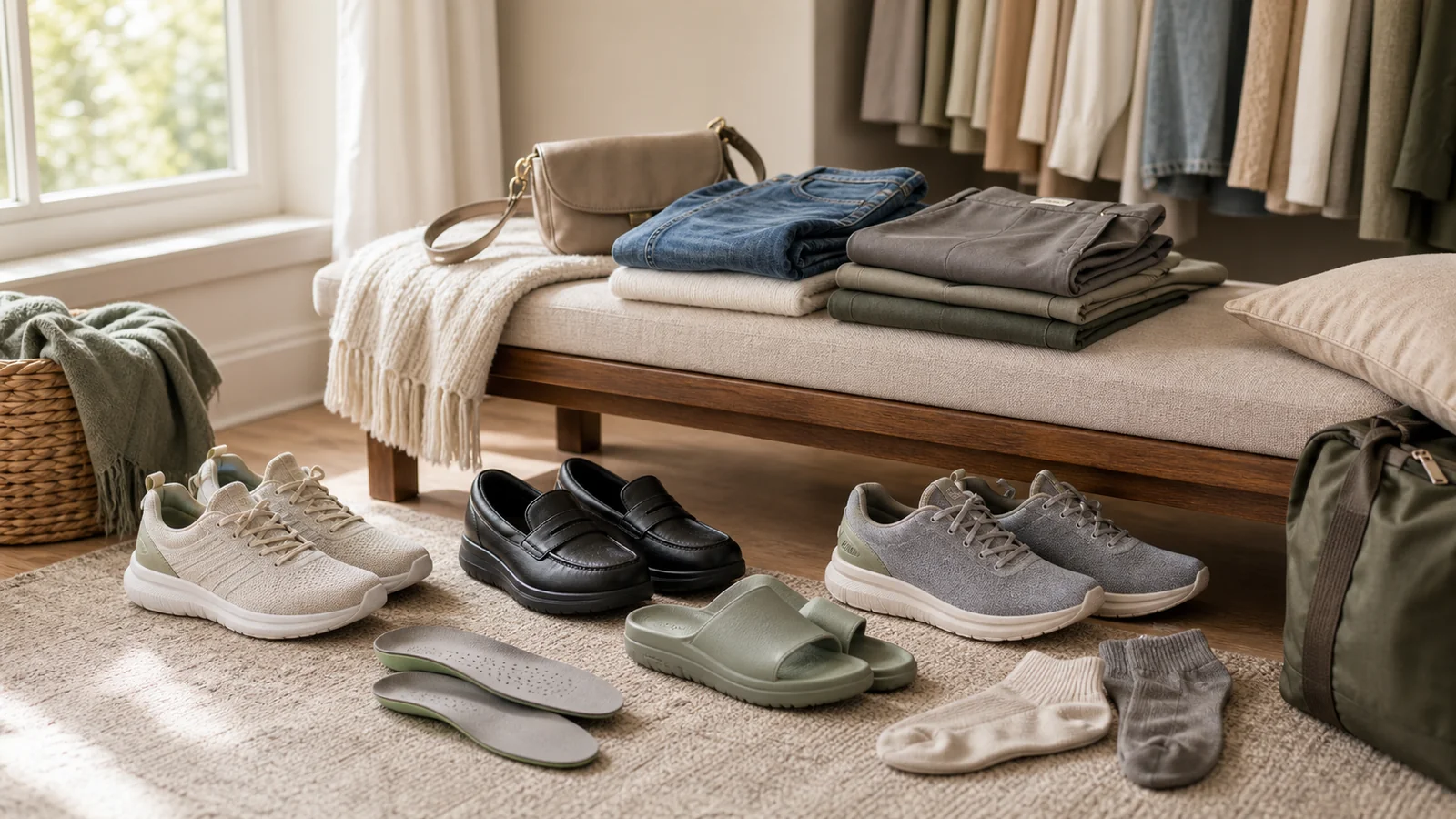
Best Shoes for Plantar Fasciitis: Support Guide
Choose plantar fasciitis shoes by arch support, heel cushioning, stability, daily use, and outfit needs.
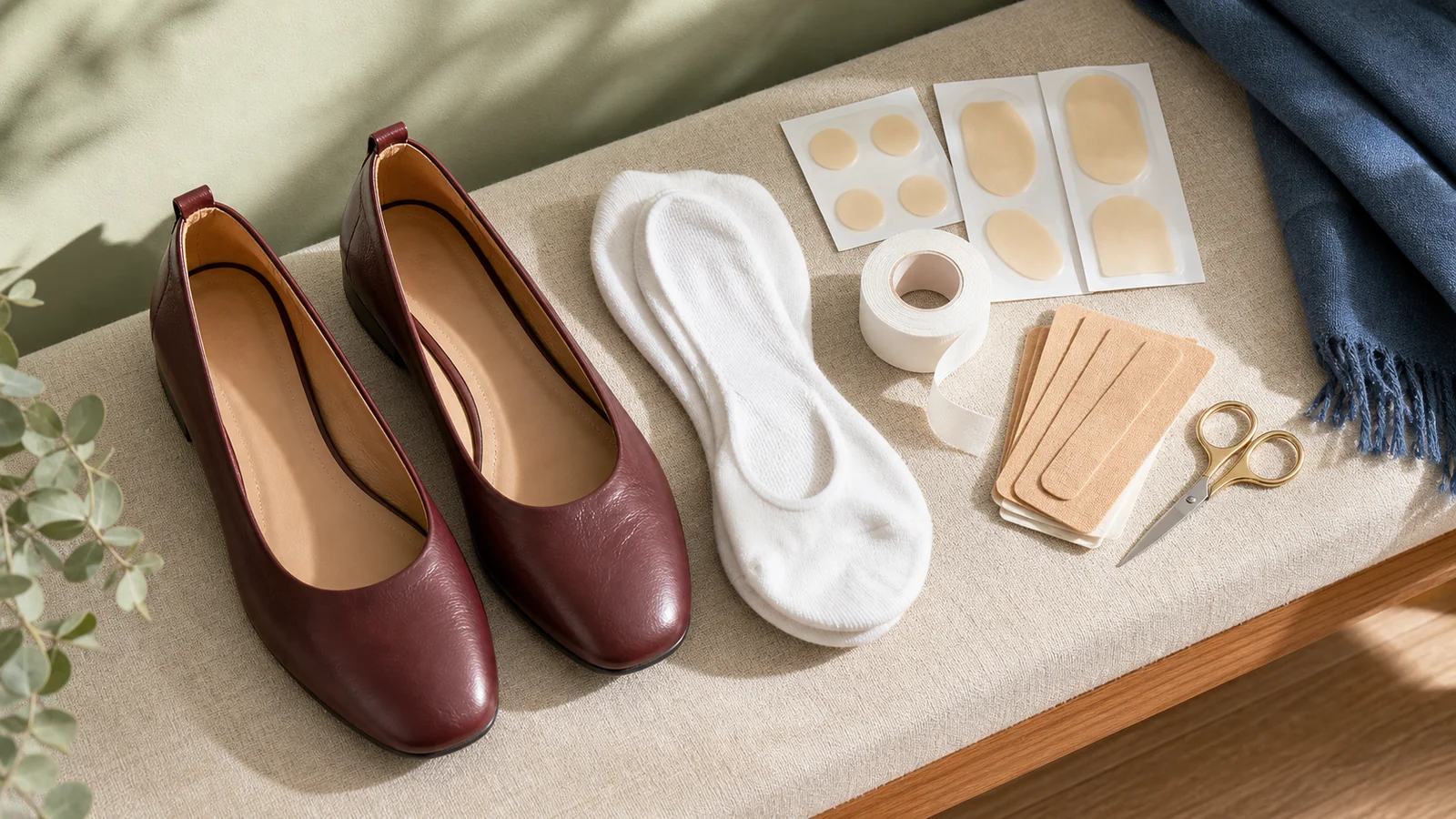
How to Stop Shoes From Blistering Your Feet
Prevent shoe blisters with better fit, socks, lacing, break-in steps, padding, and safe blister care.
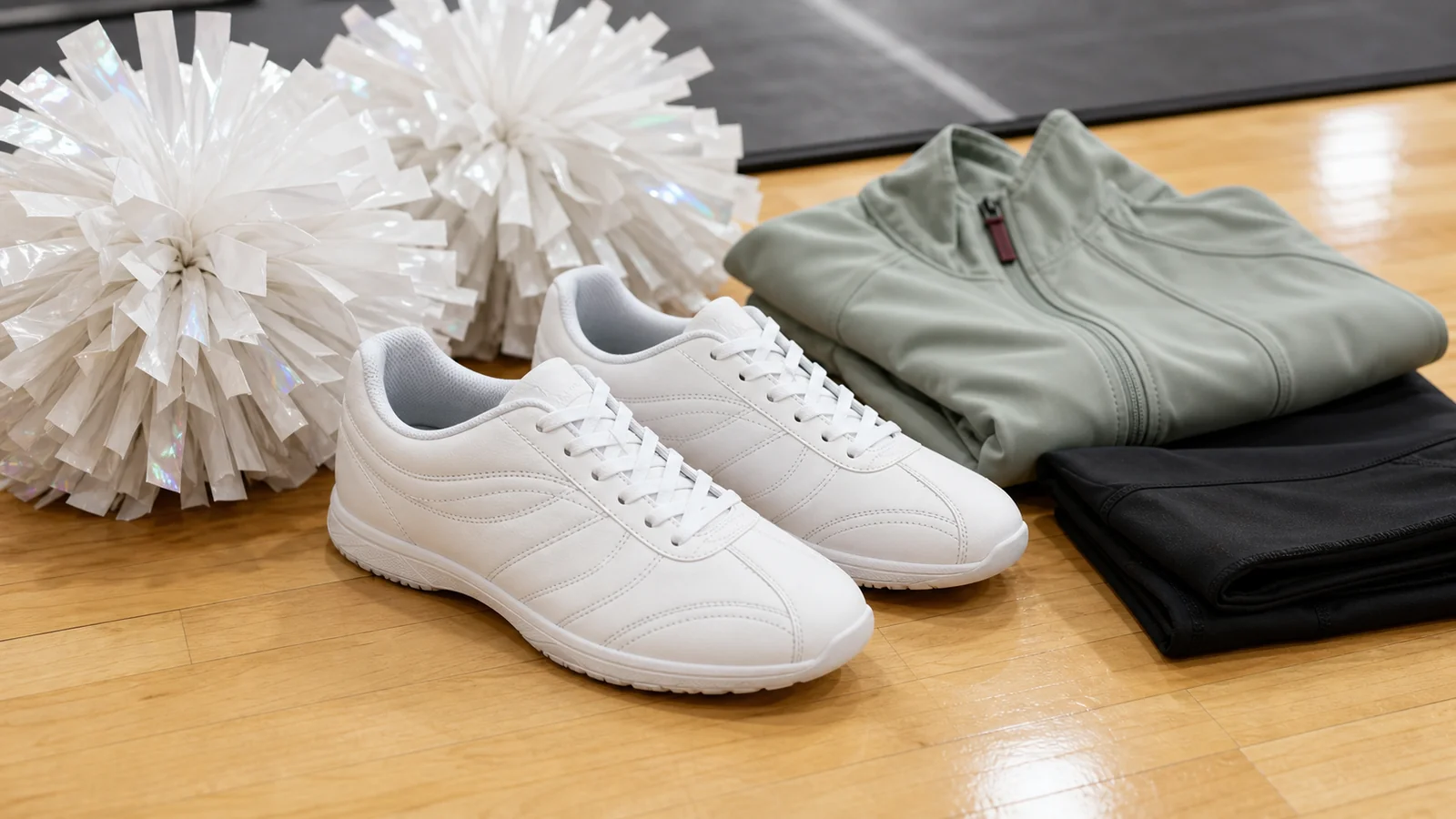
Cheer Shoes: Fit, Grip, and Style Guide
Choose cheer shoes by mat grip, support, flexibility, stunt role, team rules, sideline use, and clean white styling.