Chelsea Boots: Style, Fit, and Outfit Guide
Start With the Boot Shaft
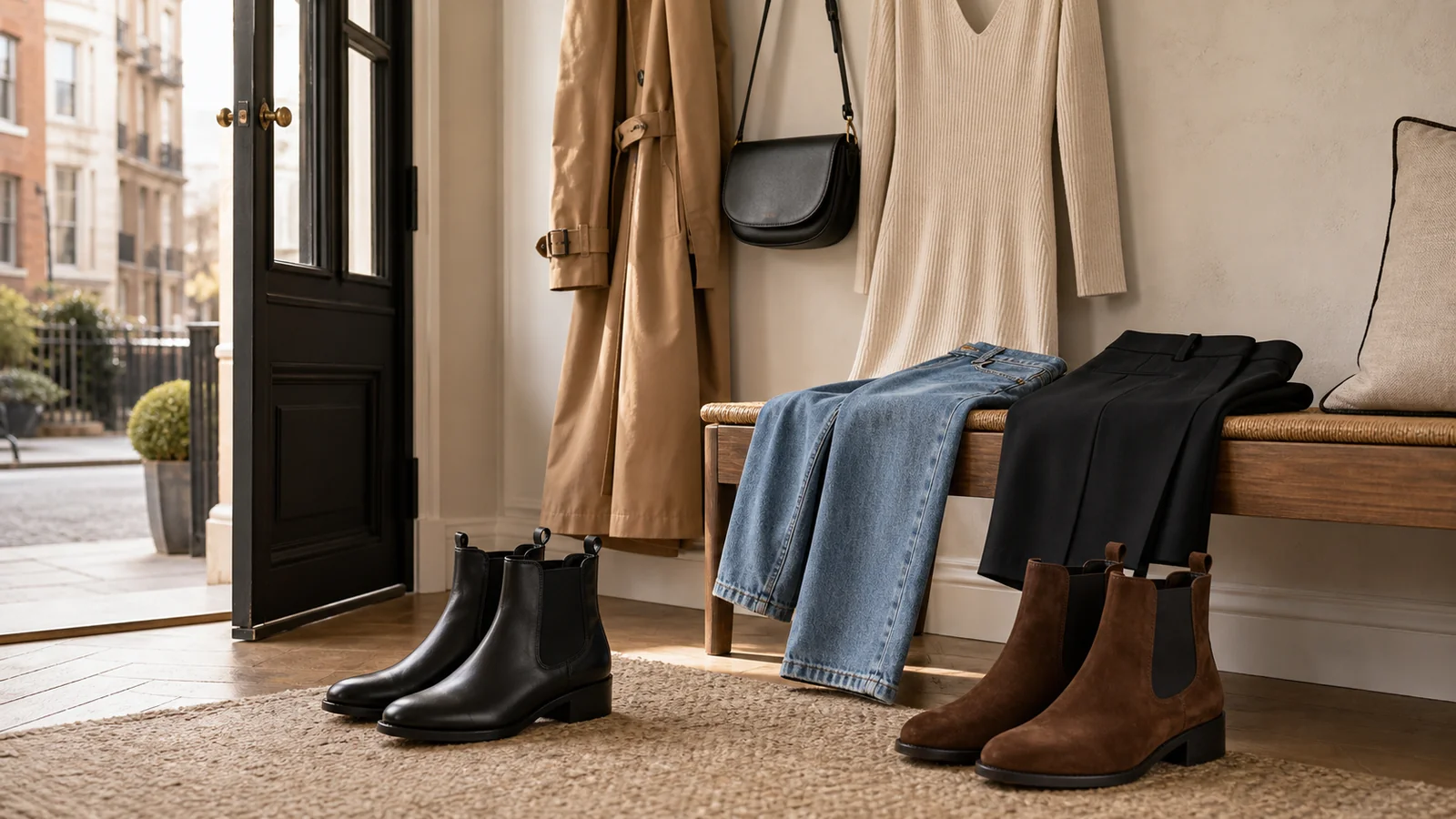
Chelsea boots are simple in theory: ankle boots with elastic side panels and a pull-on shape. In outfits, the shaft height and toe shape matter as much as the color.
A sleek Chelsea boot can make trousers look sharper. A lug-sole Chelsea boot can ground dresses and denim. A suede Chelsea boot can soften fall outfits. But if the boot shaft and hem fight each other, even a beautiful pair can look awkward.
This guide focuses on how to wear Chelsea boots in real closets: jeans, trousers, dresses, skirts, coats, socks, and daily routines. The goal is a clean connection between the boot and the rest of the outfit.
Choose the Right Chelsea Boot Type
Chelsea boots come in several shapes. Pick the type that matches your wardrobe before you worry about small styling details.
| Chelsea boot type | Outfit mood | Best with |
|---|---|---|
| Sleek leather | Polished, city-ready | Trousers, dark denim, dresses |
| Lug sole | Casual, grounded, practical | Jeans, knits, minis, quilted jackets |
| Suede | Soft, seasonal, relaxed | Denim, wool coats, fall neutrals |
| Pointed toe | Dressier and lengthening | Tailoring, midi skirts, black trousers |
| Round toe | Classic and easy | Everyday denim, casual dresses |
| Platform | Trend-forward and bold | Wide jeans, mini skirts, oversized coats |
If your wardrobe is mostly tailored, start with a sleek leather pair. If your outfits are casual and weather-aware, a lug-sole pair may earn more wear. If you live in denim, knits, and coats, suede can be useful as long as your weather allows it.
Fit Comes Before Styling
Chelsea boots should be secure, but they should not trap your foot. Because they pull on instead of lacing up, the fit has to work through the ankle, instep, heel, and toe box.
Check these points:
- Your heel can move slightly, but it should not slide dramatically.
- The elastic side panels should flex without bulging.
- Your toes should not hit the front when walking downhill.
- The instep should not press painfully on the top of your foot.
- The shaft should sit close enough to the ankle to look clean.
- You should be able to wear the socks you plan to use.
Leather may soften, but a too-short or too-narrow boot is not a good gamble. Suede often feels softer sooner, but it still needs enough structure to hold the foot.
If the boot rubs the heel or ankle during early wear, slow down the break-in. Our how to stop shoes from blistering guide covers socks, padding, and hot-spot prevention.
Chelsea Boots With Straight Jeans
Straight jeans are the easiest match for Chelsea boots. The hem can sit just above the boot, touch the top of the shaft, or fall with a slight break over the front.
For a clean everyday look, wear black leather Chelsea boots with straight blue jeans, a white tee, and a trench or wool coat. The boots ground the denim without making the outfit fussy.
For cooler weather, try dark straight jeans, a ribbed sweater, and suede Chelsea boots. Add a coat that picks up one of the boot tones, such as camel, charcoal, olive, or navy.
Avoid a hem that bunches heavily around the boot opening. Too much fabric can make the ankle look crowded. If the jeans are long, cuff once, hem them, or choose a slimmer boot shaft that can sit under the denim more cleanly.
Chelsea Boots With Skinny Jeans or Leggings
Skinny jeans and leggings can work with Chelsea boots, but the connection at the ankle has to look deliberate.
The easiest formula is black skinny jeans with black Chelsea boots. The color match creates one long line and avoids a chopped ankle. Add an oversized shirt, blazer, quilted jacket, or long coat to balance the slim lower half.
With blue skinny jeans, tuck the hem neatly into the boot only if the boot shaft has enough room and the fabric stays smooth. If the denim bunches, let the hem sit above the boot and use socks in a related color.
Leggings work best with lug-sole or chunkier Chelsea boots because the boot gives the outfit structure. Add a longer sweater, puffer vest, trench, oversized blazer, or bomber jacket so the look feels styled rather than gym-only.
Chelsea Boots With Wide-Leg Jeans and Trousers
Wide-leg bottoms need a boot with enough presence. A very slim Chelsea boot can disappear under a wide hem, while a platform or lug sole can balance the volume.
For wide-leg jeans, the hem should either skim the top of the boot or break slightly over it. If the fabric drags, the boot shape gets lost and the outfit looks unfinished.
For tailored wide trousers, choose a sleek leather or pointed Chelsea boot. The toe should show under the hem when you walk. Black boots with black trousers look long and polished. Brown or burgundy boots can soften gray, navy, camel, and denim.
For cropped wide trousers, let the boot fill the gap. The shaft should sit high enough that there is not a cold, awkward strip of skin unless that is the intended look. Socks can help, but they should look chosen.
Chelsea Boots With Dresses and Skirts
Chelsea boots are excellent with dresses because they make soft pieces feel more grounded. They are especially useful in fall and winter when delicate shoes feel too light.
With a mini dress, Chelsea boots add balance. Lug soles feel casual and strong. Sleek leather boots feel sharper. Add tights when the weather or proportions need a continuous line.
With a midi dress, boot height matters. The hem should move over the boot without catching. A side slit can help the outfit feel lighter. Black Chelsea boots with a black or dark floral midi create a clean seasonal look.
With a sweater dress, choose a boot with structure. A suede Chelsea boot can look soft, while a black lug-sole boot adds contrast. Add a long coat if the dress feels too bare.
With skirts, Chelsea boots work with denim skirts, pleated midis, slip skirts, and wool minis. If the skirt is delicate, use a sleeker boot. If the skirt is casual, a lug sole can work beautifully.
Black, Brown, or Suede?
Black Chelsea boots are the most versatile if your wardrobe includes black denim, gray, navy, leather jackets, black coats, and city outfits. They create a clean line with black tights or black trousers.
Brown Chelsea boots feel warmer. They work with blue denim, camel coats, cream knits, olive jackets, corduroy, plaid, and fall colors. Dark chocolate is easier to style than very orange tan.
Suede Chelsea boots soften outfits. They look good with denim, wool, ribbed knits, quilted jackets, and relaxed tailoring. The trade-off is weather care. Suede is not ideal for heavy rain, slush, or muddy days unless treated and worn carefully.
Patent or high-shine Chelsea boots feel dressier and sharper. They can make an all-black outfit look intentional because the shine adds texture.
For black clothing with different shoe colors, our shoes for black outfits guide can help you decide when to stay black and when to add contrast.
Socks and Tights Matter
Because Chelsea boots sit at the ankle, socks and tights often show. Treat them as part of the outfit.
Black socks with black boots are the easiest. They hide gaps and make cropped jeans or trousers look cleaner. Gray socks soften black boots with blue denim. Cream socks can look intentional with loafers and some boots, but with Chelsea boots they should be neat, not bulky.
With dresses, black tights and black Chelsea boots create a long line. Sheer black tights feel dressier. Opaque tights feel warmer and more casual. If the dress is light, consider brown suede boots, sheer tights, or bare legs in mild weather to avoid too much contrast.
Avoid thick socks that bunch above the boot unless the outfit is intentionally outdoorsy. If the sock is visible, choose a color and texture you would be comfortable showing.
Seasonal Outfit Formulas
For early fall, wear brown suede Chelsea boots with straight jeans, a striped tee, and a trench. Add a cream sweater over the shoulders if the day cools down.
For rainy city days, wear black leather lug-sole Chelsea boots with black jeans, a fine knit, and a waterproof trench or quilted jacket. Check the boot’s weather resistance before treating it like a rain boot.
For a casual office, pair sleek black Chelsea boots with cropped trousers, a button-down shirt, and a blazer. The boot should look refined, not muddy or overly rugged.
For a weekend dress outfit, wear a ribbed midi dress with black Chelsea boots and a long wool coat. Add a structured bag to keep the look polished.
For travel, choose Chelsea boots only if they are already broken in. Wear them with soft trousers, straight jeans, a fine sweater, and a coat. Pull-on boots are convenient, but not if the shaft rubs through a long walking day.
Care and Weather
Chelsea boots are often bought for practical style, but leather and suede still need care.
Brush dirt off after wear. Wipe smooth leather with a soft cloth. Condition leather when it looks dry, following product directions. Protect suede with a suede-safe spray and use a suede brush for surface marks.
Let wet boots dry naturally away from direct heat. Stuffing them lightly with paper can help absorb moisture and keep shape. Do not dry leather boots against a heater.
Check the heel and sole. A worn heel can change how the boot feels and looks. If the upper is good, a cobbler may be able to refresh soles, heel tips, or elastic panels depending on construction. Our shoe repair near me guide explains when repair may be worth it.
Common Chelsea Boot Mistakes
The first mistake is ignoring shaft height. If the boot cuts the ankle awkwardly, the outfit will be harder to style.
The second mistake is wearing jeans that bunch heavily over the boot. Hem length matters.
The third mistake is choosing a lug sole when your wardrobe needs sleek polish, or choosing a sleek boot when your routine needs traction and durability.
The fourth mistake is assuming suede can handle all weather. It needs more care than smooth leather.
The fifth mistake is buying a pull-on boot that is too tight across the instep. Without laces, adjustment is limited.
FAQ
What pants look best with Chelsea boots?
Straight jeans, cropped trousers, slim jeans, wide-leg trousers, and tailored pants can all work. The key is a clean hem that meets the boot without bunching.
Can Chelsea boots be worn with dresses?
Yes. Chelsea boots work with mini dresses, sweater dresses, midi dresses, shirt dresses, and skirts. Sleek boots look dressier, while lug soles make dresses feel more casual and grounded.
Should jeans go over or into Chelsea boots?
Straight and wide jeans usually sit over or just above the boot. Skinny jeans can tuck in if they stay smooth. Avoid bulky fabric stuffed into a narrow shaft.
Are Chelsea boots good for walking?
They can be if the fit, sole, cushioning, and heel hold are comfortable. Break them in before long travel days, and choose a grippy sole if you walk on wet or uneven streets.
The Bottom Line
Chelsea boots work because they are simple, but the styling details matter. Choose the right boot shape, check the shaft, and match the hem to the boot. Sleek leather pairs polish outfits, lug soles ground casual looks, and suede softens seasonal layers. When the ankle connection is clean, Chelsea boots can carry jeans, trousers, dresses, and coats with very little effort.
You might also like
Ballet Shoes vs Ballet Flats: Style Guide
Compare ballet shoes and ballet flats by dance use, street wear, fit, soles, materials, outfit styling, and care.
White Heel Shoes Outfit Guide
Style white heel shoes with denim, dresses, tailoring, color, and seasonal outfits without looking too bridal.
Black Shoes Outfit Styling Guide
Style black shoes with denim, dresses, trousers, color, texture, and seasonal outfits without looking flat.