Pickleball Shoes: Fit and Grip Guide
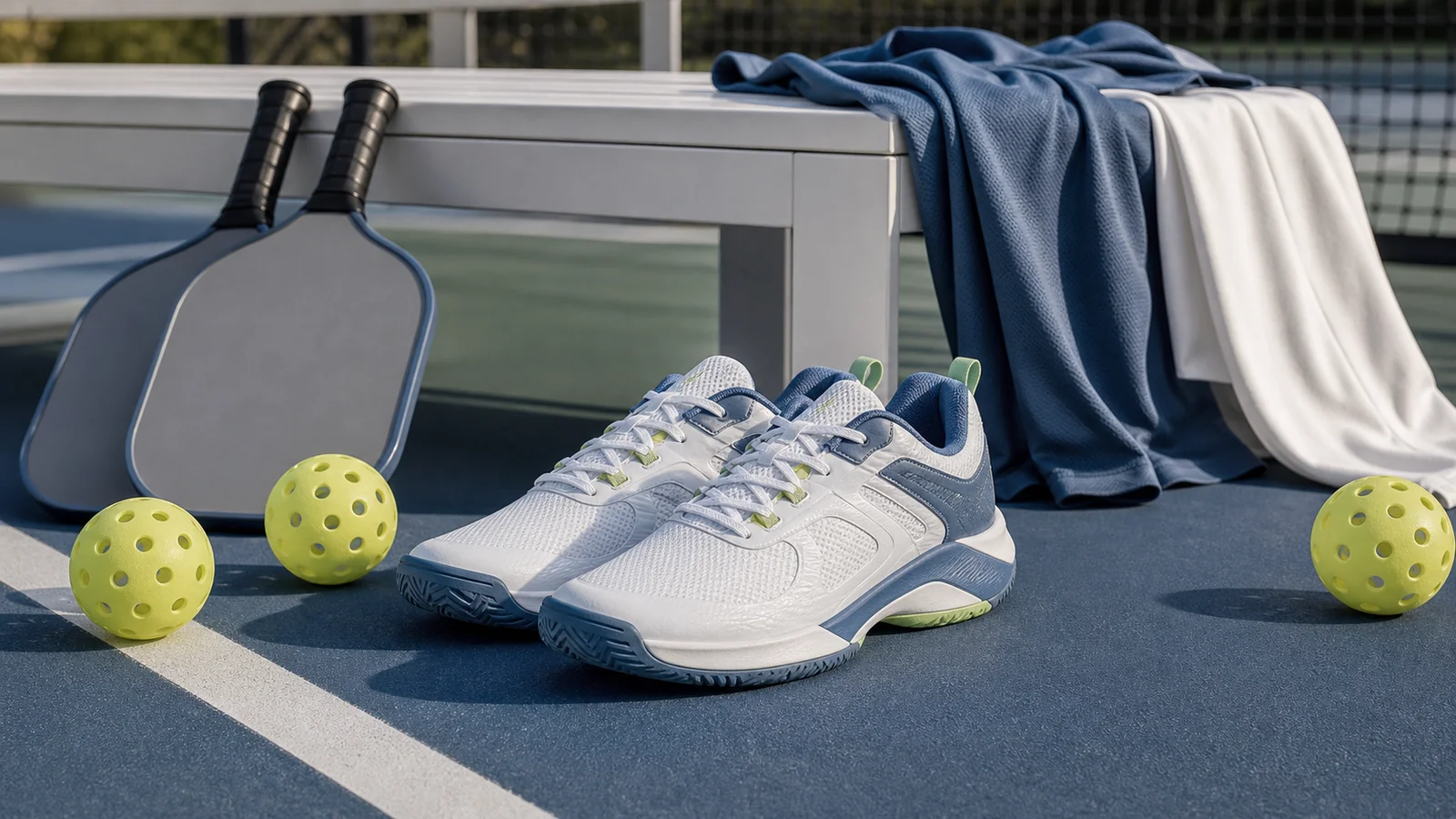
Pick Court Support Over Running Cushion
Pickleball shoes need to handle quick side steps, short sprints, stops, pivots, and repeated starts. That is a different job from running shoes, which are mostly built for forward motion.
The best pickleball shoes are usually court shoes: tennis shoes, pickleball-specific shoes, or indoor court shoes with the right outsole for your surface. They should grip without sticking, hold your foot during lateral movement, cushion hard stops, and feel stable when you change direction.
This is a practical toplist-style guide by player need. It does not claim one universal winner. Your court surface, foot width, injury history, and playing frequency matter.
What Pickleball Shoes Need
Pickleball looks casual until your feet start working. A good shoe should feel secure before you think about colors or brands.
Look for:
| Feature | Why it matters | Watch out for |
|---|---|---|
| Lateral support | Holds the foot during side steps | Soft running uppers that roll |
| Court outsole | Grips hard courts or indoor floors | Tread that is too slick or too sticky |
| Stable base | Reduces wobble during stops | Tall foam that feels tippy |
| Toe durability | Protects drag areas | Thin mesh at the front |
| Heel hold | Prevents slipping and blisters | Loose collars |
| Cushioning | Softens impact | Mushy foam without control |
| Width options | Helps toe comfort and balance | Narrow toe boxes |
If you are new to the sport, do not start with your softest running shoes. They may feel comfortable at first but can be unstable when you move sideways.
Best Overall Type: Tennis or Pickleball Court Shoes
For most outdoor pickleball players, tennis shoes or pickleball-specific court shoes are the safest starting point. They are designed for hard-court traction and lateral movement.
Popular court-shoe brands often discussed by pickleball players include K-Swiss, ASICS, Babolat, Wilson, Head, Nike, Adidas, New Balance, Skechers, and Fila. The exact model matters more than the brand. Choose by fit, surface, and support.
This type is best if you play on outdoor hard courts, take lessons, join regular games, or move quickly at the kitchen line. Look for a durable outsole, reinforced toe, secure upper, and enough cushioning for your knees and feet.
For styling, white court shoes are the easiest. They work with tennis skirts, skorts, shorts, joggers, sweatshirts, and casual post-game outfits. Darker shoes hide scuffs better but can look heavier with pale court clothes.
Best for Beginners: Stable, Not Extreme
Beginners often need stability more than speed. A very light, flexible shoe may feel exciting, but it can leave the foot unsupported during awkward stops.
Choose a beginner-friendly pickleball shoe with a stable base, moderate cushioning, secure laces, and enough toe room. You do not need the most technical or expensive option for casual play, but you do need real court support.
Before keeping a pair, try these movements:
- Side shuffle
- Quick stop
- Forward step and backpedal
- Gentle pivot
- Lunge to each side
- Short split step
Your foot should stay centered. If the shoe rolls outward, slips at the heel, or presses your toes, keep looking.
Best for Wide Feet: Width Options and Toe Room
Pickleball can be rough on wide feet because side movement pushes toes against the upper. A too-narrow shoe can cause pressure, numbness, blisters, or unstable foot placement.
Look for brands and models with wide sizes or naturally roomier toe boxes. New Balance, K-Swiss, Skechers, and some tennis-shoe brands may offer options worth trying, depending on the current model.
Wide-foot checks:
- The pinky toe is not crushed.
- The big toe joint is not pressed sideways.
- The laces secure the midfoot without over-tightening.
- The forefoot does not spill over the sole.
- Your toes can spread slightly during a stop.
Do not solve width by sizing up too much. Extra length can make the heel slip. A proper wide width is usually better than a long shoe.
Best for Plantar Fasciitis or Heel Sensitivity
If you have heel pain or plantar fasciitis symptoms, talk with a clinician if pain persists. Pickleball involves quick loading, so supportive shoes matter.
Look for a cushioned heel, stable base, good arch feel, secure heel counter, and removable insole if you use orthotics. Avoid very flat, flimsy shoes and worn-out court shoes.
The shoe should bend near the forefoot, not collapse through the middle. It should cushion impact without feeling unstable. If your orthotic lifts the heel too much, the shoe may need more depth.
Our best shoes for plantar fasciitis guide explains the support features in more detail. For flat feet, our best running shoes for flat feet guide also has useful fit checks, even though pickleball still needs court-specific traction.
Best Lightweight Option: Fast but Still Secure
Lightweight pickleball shoes can feel great for quicker players. They make short bursts and recovery steps feel easier. The risk is losing durability or lateral support.
Choose lightweight court shoes only if the upper still holds your foot. Check the sidewalls, lacing, heel counter, and outsole width. If the shoe twists easily in your hands, it may not give enough support for hard play.
Lightweight shoes are useful if:
- You play short sessions.
- You value speed over maximum cushioning.
- Your feet do not need extra structure.
- You play mostly on clean, dry courts.
- You replace shoes before the outsole wears smooth.
If you are heavier on your feet or drag your toe, a more durable shoe may be smarter.
Best for Indoor Pickleball
Indoor pickleball may be played on gym floors or indoor court surfaces. You need a non-marking outsole with grip that suits the floor. Outdoor tennis shoes can sometimes work, but they may feel too aggressive or mark certain surfaces if they are not approved.
Look for indoor court shoes, volleyball shoes, badminton shoes, or pickleball shoes marked for indoor use when the facility requires it. The shoe should grip without catching. Too much stick can make pivots feel awkward.
For indoor outfits, court shoes work well with skorts, shorts, leggings, joggers, and fitted tops. If the shoe has bright colors, keep the rest of the outfit simpler.
Best for Outdoor Hard Courts
Outdoor hard courts usually need durable outsoles and stronger toe protection. The surface can wear shoes quickly, especially if you drag your toe or play several times a week.
Outdoor pickleball shoes should have:
- Durable rubber outsole
- Reinforced toe or medial drag area
- Lateral stability
- Enough cushioning for hard landings
- Secure heel hold
- Breathable upper for warm weather
If your outsole gets smooth in high-wear areas, replace the shoes. Worn traction can make quick stops unsafe.
Running Shoes vs Pickleball Shoes
Running shoes are built for forward movement. Pickleball shoes are built for side-to-side movement, stopping, starting, and court traction.
Running shoes often have soft cushioning and higher stack heights. That can feel comfortable while walking, but it may feel unstable during lateral cuts. The upper may also stretch too much when your foot pushes sideways.
Pickleball or tennis shoes usually have flatter, wider bases, stronger side support, and outsoles made for court grip. They may feel less plush than running shoes, but they usually control movement better.
If you play once casually, a clean athletic shoe may get you through. If you play regularly, buy court shoes. Your feet, ankles, and knees will notice the difference.
How Pickleball Shoes Should Fit
Try pickleball shoes with the socks you use for play. Feet can swell during games, so leave some front space, but do not allow heel slipping.
Fit checks:
- A little room in front of the longest toe
- No pinching through the forefoot
- Heel held during side steps
- Midfoot secure but not numb
- No rubbing around the collar
- Laces stay tied and balanced
- Shoe feels stable during a split step
If one foot is larger, fit the larger foot. If you use insoles, bring them to the fitting. Do not stack insoles unless a clinician recommends it.
Outfit and Color Tips
Pickleball shoes are sporty, but they can still look styled. White, gray, navy, black, and cream are easiest to repeat. Soft lime, sky blue, coral, and lavender accents can look fresh with court outfits.
For a clean outfit, pair white pickleball shoes with a navy skort, white tank, and lightweight jacket. For a more casual look, wear gray court shoes with black shorts and a soft sweatshirt. For warm weather, try white shoes with a pleated skirt, cropped polo, and low socks.
If you go from court to coffee, keep the shoes clean and choose outfit pieces that look intentional off court: tennis skirt, simple tee, zip jacket, straight-leg track pants, or a relaxed button-down.
Avoid wearing court shoes that are dirty or heavily worn as everyday sneakers. Scuffed toes and smooth outsoles can make the whole outfit look tired.
Common Mistakes
The first mistake is wearing soft running shoes for serious play. They may not support side movement.
The second mistake is choosing too much cushion without stability. Pickleball needs control.
The third mistake is ignoring court surface. Indoor and outdoor shoes may need different outsoles.
The fourth mistake is buying narrow shoes and hoping they stretch. Side movement makes pressure worse.
The fifth mistake is waiting too long to replace worn shoes. Smooth soles can slip.
FAQ
What shoes are best for pickleball?
Court shoes are usually best for pickleball. Tennis shoes, pickleball-specific shoes, or indoor court shoes can work depending on your playing surface.
Can I wear running shoes for pickleball?
Running shoes are not ideal for regular pickleball because they are built for forward motion. Pickleball needs lateral support, stable outsoles, and court traction.
Are tennis shoes good for pickleball?
Yes. Tennis shoes are often a strong choice for outdoor pickleball because they are built for hard courts, side movement, stopping, and toe durability.
Should pickleball shoes be tight?
They should be secure, not tight. Your heel should stay held, your midfoot should feel supported, and your toes should have enough room to move slightly.
The Bottom Line
Pickleball shoes should feel stable before they feel stylish. Start with court traction, lateral support, fit, and surface needs. Then choose the color and shape that work with your court outfits. A good pair helps you move confidently, protect your feet, and still look polished after the game.
You might also like
Cheer Shoes: Fit, Grip, and Style Guide
Choose cheer shoes by mat grip, support, flexibility, stunt role, team rules, sideline use, and clean white styling.
Basketball Shoes for Me: Fit and Style Guide
Choose basketball shoes by court use, fit, traction, cushioning, ankle feel, and outfits that handle the sneaker shape.
Angel Reese Shoes: Style and Fit Guide
Review Angel Reese shoes by basketball use, bold styling, fit checks, outfit formulas, kids sizing, and care.